Sunday, November 27, 2011

Feejee tips

Fiji can be an expensive country to travel on a backpackers budget (even though it seems nowadays most backpackers have a far thicker shoestring than we have ever had!) but there are still some ways to enjoy a Fijian tropical paradise holiday without breaking the bank, and also stepping off the beaten track at the same time. Heres what we did:

Getting from the airport terminal to the main road is just 5 minutes walk, and if it's not raining it will seem like much less! From here you can flag down a Lautoka bound minibus for just F$2 for the 30 min journey. From Lautoka you can take a Suva bound bus via either the Kings Highway (north and east coasts) or the Queens (West and South) and therefore get to anywhere you want on Viti Levu. Whilst waiting for the bus you can pick up some cheap Indian snacks from the stalls scattered around the station and market area - 4 pieces of chili pakora for F$0.50c for instance.

The Sunbeam bus going via the Kings highway cost us F$8.40 each to get as far as Vaileka (approx 2-3 hours) from where we took a taxi to Ellington Wharf for a further $15. Ellington Wharf is the jumping off point for the small, quiet island of Nananu-I-Ra and most accommodations will add a boat transfer on for a small fee. It is a good idea to take some basic supplies with you as meals are a bit more expensive on the island. We took some instant noodles and pasta meals that we had brought over from the UK but you can pick these up in Vaileka (or even better choice in Lautoka) for around F$1-3 per pack, F$2.50 for a premium Shin Cup though! Mineral water costs around F$2 for a 1.5l bottle although the tap water is generally drinkable all over. Fresh fruits are sold in 'piles' based on availability, seasonality etc with piles costing from F$2-5, e.g. F$3 for 5 mangoes, F$5 for 3 pineapples, F$2 for bunch of bananas.

We stayed at McDonalds cottages (http://www.macsnananu.com/) on Nananu-I-Ra and we can highly recommend it. Run by the very friendly and helpful Maxine we received a free room upgrade from a Twin room (F$90 per night) to a Standard Cottage Bure (F$135 per night) which are ocean-facing and fully self-contained with kitchenette. They also offer dorm beds at F$26 per night or a "Romantic Superior Cottage Bure" at F$145 per night. The boat transfer was an extra F$80 p.p. A bottle of Fiji Bitter (or the watery Fiji Gold) at McDonalds is just F$3.50 and their famous pizzas cost around F$19-30 each. On our last night we took the fish special, a traditional Fijian dish of fish in coconut sauce with sweet potato and some sort of spinach on the side. A bit pricey at F$29 but well worth it.

Leaving Nananu-I-Ra a taxi from the Wharf back to the main road costs F$3 from where a Suva-bound bus can be flagged down. Continuing along the Kings highway cost another F$12.50 to get to Suva, roughly 3 or 4 hours away. Suva is the biggest city and worth a brief wander around. There are some good, cheap cafe restaurants near the bus station, the best of which Bombay Dhaba, serves a great Fish curry with rice, chapati, papadum and veggies for F$7. We filled up our bags with more piles of fresh fruit here and also took away some some tuna curry roti's that are sold by a row of stalls at F$1 each.

From Suva travelling along the Queens Highway to the Coral Coast the road is a bit quicker and easier than the northern route. An air-con Sunbeam coach cost us about F$10 and dropped us off right outside the Beachouse (http://www.fijibeachouse.com/) a backpackers resort on the Coral coast. This stretch of Fiji is regarded as being past it's best and there is certainly not much coral around anymore but the resort is very well run and if all you are looking for is rest and relaxation on a sandy beach, gazing at turquise sea then this will suffice. There are some great deals offered for longer stays, we took advantage of the Bula special which was F$280 for 5 nights in a Garden Bure with a beautiful ensuite and included free wifi, breakfast and afternoon tea. The dorm special for 6 nights was offered at F$90, however I see that they have recently increased their prices. A mug of beer in Happy Hour (5-7pm) costs F$3.30 and their dinners cost around F$15 although there is more an emphasis on quality and presentation rather than quantity, if you catch my drift. Outside of happy hour the best offer was a jug of beer (serves 4) for F$15. It is an easy place to spend a few days with a lot of free activities on offer.

Heading back to Nadi we took a minibus from Beachouse direct to Bluewater Lodge backpackers for F$20. A Sunbeam bus would cost around F$12 but would take you only as far as the Nadi bus station. A dorm bed at Bluewater Lodge cost just F$20. There are a bunch of hostels in this little suburb between the town and the airport, all cost around the same, we just had Bluewater recommended to us and it was a nice, quiet place to stay, even if it did get close to flooded by the torrential afternoon downpour! A taxi downtown is F$8 and entry to the beautiful Hindu temple in Nadi is just F$3.50. Our tip for a meal in Nadi would be at The Curry House, a great little Indian restaurant. It is slightly more expensive but the portion is so huge it should count as two meals! Fish/prawn curries cost around F$25-30 with a whole platter of trimmings.

Finally a taxi from Bluewater to the airport cost us F$12, good value if you can find a couple of extra people to share the cost.

Of course we stuck to Viti Levu so missed the major tourist drawcard of the Mamanuca and Yasawa islands. If we had an extra week and a pot more cash we would probably have taken a ride up and down the island chain on that big yellow "Flyer" boat, the photos of the islands look great although we did hear that the resorts can get a bit claustrophobic, especially if you don't feel like joining in the water polo and beach volleyball. As it is we were very happy to have experienced Fiji in the manner which we did.

Exchange rate - F$1 = GBP£0.35, CZK10.


Novy Zeland-jizni ostrov

Na jiznim ostrove jsme zacali v Kaikoure, uzasne mestecko v nadherne poloze. Meli jsme tam sraz s Pavlem, ktery o den drive pristal v Christchurchi. Krasna cesta podel pobrezi, kde clovek nevi co driv,jestli pozorovat tulene, tucnaky, albatrosy a obcas se do toho vynori nekde nejaka velryba a nebo na druhe strane vrcholky zasnezenych hor.


Dali jsme turu po pobrezi pres kolonii tulenu a zakoncili jsme to langustou k obedu (ne jen ze langusty je v mistnich vodach hojnost, ale taky jmeno mesta ,,KAI’’ znamena v maorstine jidlo a ,,KOURA’’ je langusta). Lenka s Pavlem jeli na pozorovani velryb, more bylo troche divoky a vsichni na lodi zvraceli, ale videli jednoho vorvane a ukazal i ocas.


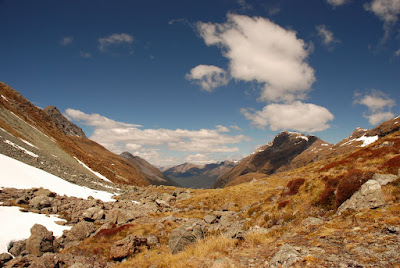
Nalozili jsme auto, nakoupili zasoby a pokracovali k jezeru Tekapo. Mala vesnicka vedle tyrkysoveho jezera s vyhledem na zasnezene hory. Bylo krasne odpoledne, ale trochu prituhlo, v noci jsme ve spacakach klepali kosu a rano nas probudil zvlastni zvuk. Snih!! Vylejzat ze zasnezenyho stanu neni fakt sranda, hlavne se spacakama do +5 stupnu! Po teple ovesne kasi a nekolika cajich prestalo snezit a in a chvilku vysvitlo slunicko a tak jsme se rozhodli pro vyslap vrcholu Mount John. Nahore byla kavarna, pocasi se menilo kazdych par minut, ale stalo to zato, nekolikrat se nebe roztrhalo ameli jsme nadherny vyhled.


Narodni park Mt Cook byl nasi dalsi zastavkou, je to nejvyssi hora v Australasii s vyskou 3755m. Maorove ji znaji jako Aoraki (Probodavac mraku). Vystup je jen pro zkusene horolezce a tak jsme meli v planu jen celodenni vyslap s jeste lepsim vyhledem nez z vesnice Mt Cook. Bohuzel snezilo cely den a kdyz uz jsme meli skoro rozbaleny stany ’’uplne sami’’ v kempu zapadanym snehem, tak jsme si rekli, ze si nebudem hrat na hrdiny a pujdem do hostelu. Udelali jsme dobre, v noci mrzlo a jeste pripadlo. Rano nas probudilo slunicko a uplne jasna obloha a masivni vrcholy. Bylo opravdu krasne, vyskrabali jsme se nejvysse co to slo, kdyz nam byl snih po kolena, vratili jsme se dolu.


Noc ve stanu jsme si neumeli predstavit a dalsi noc v hostelu by byl moc velkej luxus a tak jsme pokracovali zasnezenou krajinou smer Wanaka. Na informacich ve Wanace nam rekli, ze vetsina treku je zavrenych kvuli lavinam a tak jsme museli vymyslet alternativu. Zarezervovali jsme si Kepler trek a Routeburn trek 2 mesice predem, abysme se tam vesli, protoze v hlavni sezone je dost casto plno i na kempovani, ale to jsme netusili ze tu bude jeste tolik snehu. Ve Wanace jsme si dali to nejlepsi kafe, zelandani jsou hrdi na svoje Flat White kafe, kavarny jsou na kazdem rohu a my si uzivame vyborne kavy kazdy den. Mezi Wanakou a Queenstonem jsme zustali par dni, dali jsme si nekolik celodennich vyslapu, plavani v bazenu a za odmenu jsme ochutnali Ferg Burger, prej nejlepsi burger na Zelandu.


Sice bylo krasne, ale snih na vrskach nerostal a my jsme sli Greenstone trek a Caples trek, misto kepleru a routeburnu. Prijemnej 4 denni trek, ale jak snih tal, brodili jsme se hodne bahnem, po ceste jsme spali v chatach, abysme jsme se netahali se stanen a bylo to prijemny, se ohrat vecer a spat v posteli.


Jeden den bylo tak krasne, ze byl;o rozhodnuto o navsteve Milford Soundu, bohuzel na trek Milford Sound se skoro neda dostat, pousti jen 40 lidi dene a vetsinou to koupi cestovka rok predem a normalni lidi se na tenhle trek nedostanou. Ale pohled na Milford Sound je uzasnej a vyrazili jsme i na vylet lodi.


Na oba ledovce na zapadnim pobrezi jsme meli krasne jasno.Fox a Franz Josef.


Dvoudenni trek Coupland, kde se clovek za odmenu muze vykoupat v horkych pramenech a po 7mi hodinach stoupani je to naprosta labuz:)


To je pro dnes vse. Je tezky popisovat takovouhle dovcu, clovek jezdi autem od treku ke treku, vsude je to krasny a vecer nekde zakempuje. A tak se podivejte na vice fotek na nasem picasu. Priste dopisu o zapadnim pobrezi a Abel Tasmanu a ochutnavce vina a super zmrzlinach. Momentalne jsme v Christchurchi a vcera jsme se rozloucili s Lenkou a Pavlem, kteri leteli pres Soul domu. Nejak rychle to uteklo a ted jsme zas my dva a v aute je nejak prazdno.
Mejte se krasne.


Wednesday, November 9, 2011

ze Zelandu-severni ostrov

Trochu se zpozdenim, ale preci, pozdrav ze Zelandu. S internetem to tady neni moc horky a s nabijenim elektroniky taky ne. Zacali jsme severnim ostrovem, den po nas priletla Lenka a pujcenym autem (nissan vingroad, kombik, kterej hodne zere a byl nam malej i ve trech lidech) jsme vyrazili na sever od Aucklandu. Nevim proc, ale rozhodli jsme se navstivit Zeland v rijnu a listopadu, mysleli jsme ze konec jara a zacatek leta bude idealka, ale bohuzel pocasi tak idelani zatim neni. V Aucklandu bylo 13 stupnu a dest a napadl cerstvy snih v horach:) Pocasi nam na severu pralo par dni a i kdyz bylo 20 stupnu, slunicko hralo a i v mori jsme se vykoupali. Navstivili jsme posvatny mys Reinga, kde se misi vody Tasmanova more a Ticheho oceanu.


Prespali jsme v pralese Waipoua Kauri, mezi prastarymy stromy Kauri.


I kdyz jsme severni ostrov meli 10 dni, nejak nam pripadalo, ze nestihame a jsme porad ve spechu. Akorat melo byt finale v mistrovstvi sveta v Rugby a na celem Zelandu se nic jineho neresilo, Zaplatili jsme si opravdovej kemp se sprchou a kuchuni, abysme byli blizko mesta a mohli zajit s mistnima do hospody na finale, jinak kempujeme v DOC kempech, ktere jsou levne a vetsinou jen se zakladnim vybavenim. Bohuzel jen nekolik mesicu plati novy zakon a to, ze se nesmi volne kempovat nikde po celem Zelandu s pokutou $200. Nastesti DOC kempu je hodne, ale vetsinou jsou daleko od asfaltovych silnic a hledanim kempu clovek ujede az 50km. V Bay of Plenty jsme navstivili zname Petra a Lucku, s kterymi jsme cestovali spolecne v Mongolsku. Nas planovany Tongariro trek se tak trochu nevydaril, meli jsme zamluvene kempy na 2 noci, na posledni chvili jsme zmenili z kempovani na chaty a zaplatili rozdil, protoze nahore byl porad snih a v noci mrzlo. Prvni den jsme sli tongariro crossing, asi 17km ma to byt nejkrasnejsi cast treku, bohuzel prselo a nic jsme nevideli a nahore bylo mega snehu. Vsechna nase nepromokava vybava vydrzela asi 2 hodiny cesty a pak jsme byli zbytek dne turch a brodit se snehovyma planema bylo hrozny, jediny co nas drzelo, bylo, ze mame chatu s topenim a ze se ususime a zahrejeme. Kdyz jsme do chaty prisli, rozbilo se jim topeni!!


Takze nas tam bylo 5 lidi, uplne mokrejch, vevnitr v chate bylo tak 5 stupnu. Vsichni jsme oprezili, ale rano jsme nepokracovali dal, ale dolu na stopa k autu. Vratili nam penize za chatu, ale to nezmenilo nic na tom, ze jsme nesli zbytek treku. Ususit jsme se jeli az do Taranaki, kde jsme si v jednom kempu na pobrezi pronajali na noc chatku a vyprali jsme a ususili veci, vrchol sopky Mt.Taranaki se nam ukazal po dvou dnech


a se zastavkou ve Wellingtonu jsme trajektem opustili severni ostrov.


zdravime Monika, Allan a Lenka

Wednesday, November 2, 2011

Weather With You

Travelling around the North island of New Zealand really feels like seeing the whole world in a nutshell. A lot of countries claim that they have everything, mostly unjustified – thinking of France, Argentina and Israel here – and perhaps New Zealand doesn’t either, but it certainly can feel like it.

Arriving in Auckland was a little bit like arriving in an Asian metropolis, which is unsurprising given that 13% of Aucklanders are of Asian origin. The wall-to-wall Asian restaurants and shops, along with the neon signs and packed shopping malls gave it a feeling of Hong Kong but without the humidity, especially after the downpour that greeted us as we stepped out of the airport terminal. Apart from enjoying some katsu curry and miso soup we also took the obligatory photo of the Sky Tower and visited One Tree Hill, in the suburbs, from where there were some pretty clear views over the Auckland skyline.


Apart from the Asian cuisines New Zealand also has a few of its own culinary highlights to shout about. I suppose the two most famous New Zealand dishes would be some sort of lamb dish and crayfish, but for both of these I will have to wait for the South island. The first taste that impressed me was the coffee, served with great care and attention everywhere. I didn’t really know what a ‘flat white’ was before we got here (other than a brief explanation from a friend in Euston station early one morning) but now I can’t stop from ordering at least one a day. If I can find a steak-and-cheese pie to go with it then my life seems complete, a revolutionary concept in the savoury snack world. I was also recommended New Zealand ice cream before we arrived and I can safely say it lives up to this recommendation, the hardest part is choosing from the range of indulgent flavours. New Zealand has also embraced that mainstay of Friday nights in provincial Britain, fish and chips, even down to the correct condiments which most other countries have failed to adopt. One of the things I like about the ‘chippies’ here is that they also offer mussels, prawns and other shellfish, in addition to the usual battered fish, just to add a bit of variety.

The day after we arrived we met Monika’s sister, Lenka, at the airport and the three of us set off north from Auckland. On the way up to Cape Reinga are forests of giant Kauri trees, dwarfing everything else in the forest. These trees have been watching over the world for centuries, some of them older than Christianity. They have presided over virtually the entirity of modern history, albeit from a vantage point far removed from most of the action. Nowadays they stand there and prompt discussions among visitors as to whether you could bore a one-lane, or even two-lane, road through the base of the trunk!

We left the trees behind and continued further north to Cape Reinga, the landscape starting to resemble the stark landscape of a Patagonian plateau. Cape Reinga is not the northernmost point of New Zealand in a similar way that the Cape of Good Hope is not the southernmost point of Africa but standing on the end by the lighthouse felt like you were perched right on the edge of the world. It seems as if the ancient Maori felt the same way as they regard it as being some sort of gateway to the afterlife. Just round the corner at Spirit Bay a campsite overlooking the Pacific Ocean collide with the Tasman Sea offered the earthly pleasures of a beautiful sunset over a shell covered beach. All along the western side of the peninsula heading up to Cape Reinga lies Ninety Mile Beach, an alternative highway for those in buses, vans or those with insurance for off-road driving. At the southern end sits a small coffee van run by a typically welcoming Maori guy, claiming that is the only solar powered espresso machine in Australasia. I am prepared to give him the benefit of the doubt!


After all these transcendental experiences, driving south towards the Bay of Islands was bound to fall short of expectation, and it did. Having sold tours to the Bay of Islands waxing lyrical about the beauty I was disappointed to find that most of the highlights are hidden offshore and the town on the mainland resembled that of a British holiday resort. We did see a stingray gliding through the bay but other than that my personal highlight were the art nouveau public toilets in the town of Kawakawa. We soon snuck off to the coast just south and found an excellent, isolated campsite right by the beach, making up for our earlier disappointments.


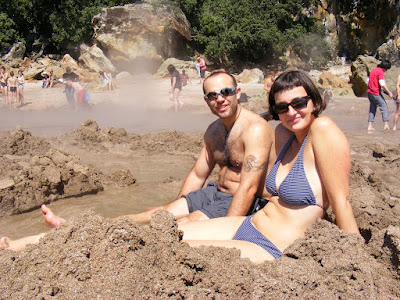
The other piece of the island that juts northward is the Coromandel peninsula, an area covered with lush forest in the inland and lined with sandy beaches and turquoise waters around the edge. One of the tourist highlights here is Hot Water Beach, where spades can be hired for $5 with which visitors can dig their own personal spa pools, mixing the sea water with the hot spring bubbling up through the sand. Just around a headland is another of the highlights – the beaches around Cathedral Cove that resemble a Thai island with their sandstone rocks, sandy beach and crystal clear water. Take a dip in the sea and that illusion will soon disappear however, the water temperature being closer to that of Cornwall than Koh Samui.
Of course the only subject being discussed in public, on TV or over the radio during this time was the Rugby World Cup, which was just coming to its conclusion. Until the day of the final I had being hoping the All Blacks would win, mainly because I could not foresee enjoying travelling in a country going through national mourning. However, whilst witnessing the final in a pub on Coromandel by half-time I was secretly rooting for the French (a rather dodgy confession to make) such was the level of hysteria being generated. Since the World Cup finished the Kiwis seem to have realised that they haven’t had a government for a few weeks and that there are elections coming up so this has replaced the rugby as the main topic of conversation on every channel. I have heard New Zealanders being discussed by European media as being a bit slow and backwards but maybe the ‘simpler’ lifestyle is a much higher standard of living, spending a lot of time outdoors and engaging in physical exercise. It is also notable just how friendly and welcoming all New Zealanders seem to be – you cannot go anywhere without striking up a conversation about their country, your country, weather, rugby and everything in between. Especially chatty tend to be the Maori guys that own cafes, shops and restaurants, part of their marketing campaign seems to be to lure people in with a good conversation and then the people realise they are enjoying themselves and indulge in whatever they are being offered!


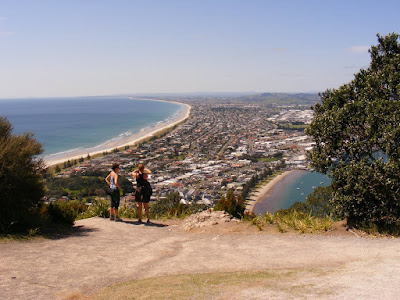
The Bay of Plenty has recently been in the news as the place where the drunk Philippine captain managed to run his tanker aground on the reef, spilling tonnes of oil into the sea, causing environmental damage and closing one of New Zealand’s most visited beaches. Along the coast we visited Petr and Lucie, who we travelled to the Gobi desert with. We spent the night at theirs, looking through their photos of Mongolia (all of us laughing when one showing Monika revealed her to be wearing exactly the same clothes as she had on that day!) and catching up on their news and more recent holidays. They have been living in New Zealand ever since arriving at the end of their trip through Russia, Mongolia and South East Asia. One of New Zealand’s most popular beaches is that at Mount Manganui just a few kilometres away, with a little mountain at the end with a trail to climb for amazing views over the Floridian style resort. We climbed on a perfect clear morning and could spot the Rena, the stricken tanker, offshore. When the weather is good here it is really good and it seems as if the government supports the outdoor lifestyle by providing great facilities to encourage people to get out and about. The strong public health systems also mean that very few people are seen on the street puffing on cigarettes, more likely puffing on hill treks.


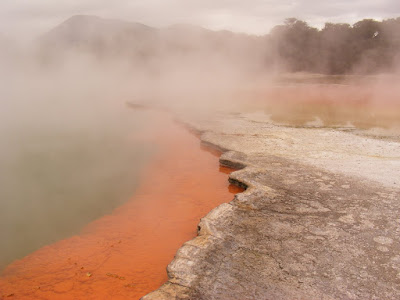
Heading inland we hit the Icelandic part of the north island amongst the sulphur springs and lakes of Rotorua. A hidden gem is the Hamurana Springs just north of the lake, crystal clear waters winding through a redwood forest. In a Maori suburb of Rotorua town itself is a church and Maori centre amongst the sulphur lakes and every small house has a hot spring in the driveway. More bubbling mud pools are hidden amongst the flowers in Kuirau Park in the centre. However none of these can be compared with the multi-coloured lakes at Wai-O-Topu Thermal Wonderland on the road to Taupo. Although the name sounds like some sort of kitsch Disney park it is more like a national park and the natural geysers and lakes attraction are well worth the entry fee, especially the famous Champagne Lake.


This kind of thermal activity normally means there are some hot springs hidden somewhere and l0-and-behold we found some just round the corner from Wai-O-Topu, joining a couple of Kiwi families in the know for a quick dip in the warm waters, some sort of preparation for the Tongariro Northern Circuit trek we were embarking on the next day. The trek starts in the Tongariro national park on the other side of Lake Taupo, which we drove around at sun set.


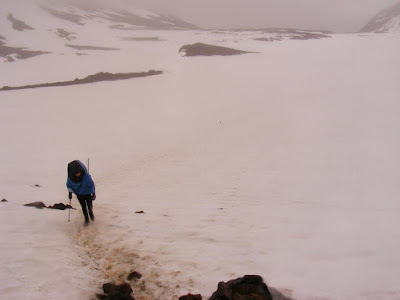
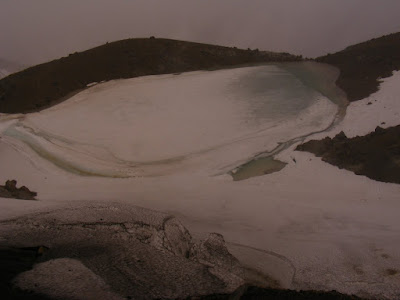
The 3-day trek was supposed to be our highlight of the North Island but of course you cannot count on the weather and we woke to driving rain. Even fully clothed in waterproofs and with decent trekking boots we were soaked after 8 hours of torrential downpour and stomping through 3m of snow. This snow also covered the lakes and craters on top, hiding the attractions that make this one of the world’s most popular treks (at least the first day of it). To top it all off we had upgraded from camping to the mountain huts due to the 3m of snow and one of the main thoughts driving us on was that of a warm hut where we could dry our clothes and warm ourselves. So imagine the disappointment when we found that the gas heater had broken down. This was unrelated to the gas outage that was blighting the north of the island and causing farmers to destroy around 30 million litres of milk. The conditions became worse over night and with hardly any dry clothes to put on we had no choice but to abandon the trek and head back down to Whakapapa. Luckily the first day is the most important (people walk it as a one-day trek, the “Tongariro Alpine Crossing”).


We drove away from Tongariro and towards Taranaki to warm up, taking not the Forgotten Highway but rather the even-more-forgotten-minor-road. No petrol for 150km (we had to return to a town to fill up) and passing through ghost towns where we only met cows and goats strolling around deserted pubs and shops.

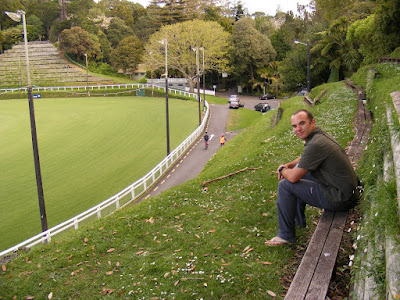
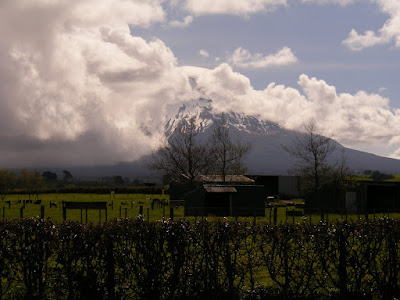
Luckily the weather was much better around Mt. Taranaki, even if we could not see the volcano itself. We walked along Fitzroy beach in New Plymouth, admired the new bridge and Len Lye’s Wind Wand and spent some time wandering through the beautiful Pukekara park, including the cricket oval cut into the hillside that is oft touted as one of the worlds most picturesque. The next day we took a rainy trek around Dawson Falls at the base of the mountain before driving away towards Wellington. And then, wham, in the rear view mirror the volcano peeked out from the clouds and we spent the rest of the afternoon admiring a slice of the volcano from various view points. A visit to New Zealand really is defined by the weather and I can really see what Crowded House meant by four seasons in one day now.


Wellington was our final stop on our North island tour. I was pleasantly surprised with the capital city. A lot of corners where people sat drinking coffee in cafes, side-streets full of street art, some really modern architecture and a harbour full of yachts swaying in the infamous Wellington winds. The lovely lady at Inter-islander ferries squeezed us on to a ferry the evening before the morning we were due to go and we snuck out of Wellington, crossed the Cook straits, negotiated the Marlborough Sounds and arrived on the South island. It is a shame that we missed the Waitomo caves and the wineries around Hawkes Bay but there is always something that must be left for next time!


Sunday, October 30, 2011

Fidzi Time

Na Fidzi jsme meli 9 dni, z casovych a financnich duvodu jsme se rozhodli zustat na hlavnim ostrove Viti levu a navstivit jen jedem maly ostrov Nananu-i-Ra na severu. Z letiste jsme se tam dostali mistni dopravou, ktera fungovala vyborne po celem ostrove. Sice nas trochu prekvapil ten dest, ale vnitrozemi je tak neuveritelne zelene, ze musi prset asi docela casto. Lide jsou vsichni pratelsti a usmevavi a nikam nespechaji. Jsou skoro napul domorodi fidzani a indo-fidzani, takze Tichomori s nadechem Indie. Na ostruvku Nananu-i-Ra bylo nadherne a byli jsme tam hlavne skoro sami.


Se zastavkou v hlavnim meste Suva, bylo tam hezke trziste, kde jsme nakoupili ovoce (uzasny, ze vsechno nejlepsi ovoce bylo zrovna v sezone, takze papaja, mango, ananas a banany) jsme se presunuli na jizni koralove pobrezi do Beach House. Meli jsme tam krasnou chatku v zahrade kousek od plaze.


Flower market, Suva


Super fish curry, Suva


Bus station, Suva


Coral coast, Beach House


Coral coast, Beach House

A po 5ti dnech valeni se na koralovem pobrezi jsme se vratili do Nadi, kde jsme navstivili hinduisticky chram a dali jsme si poradne curry.


Sri Siva Subramaniya, Nadi


Monday, October 24, 2011

Fushal, the promised land

I ticked the box on the immigration form to confirm I was not bringing any swords into Fiji and was granted entry to the country. As we stepped off the plane we were greeted by pouring rain which was not an auspicious start. We delved straight into Fiji by taking a bus to Lautoka (Fijis second largest city) and from there a bus to Rakiraki, on the north coast of Viti Levu. From these journeys we quickly learnt that Fijian bus drivers like Boney M and Abba and that the weather was due to “low pressure” over Fiji, a statement that was repeated to us so many times over the next few hours that it felt like some sort of 1984 style mind games. In Lautoka we had just enough time to grab a few Indian snacks (chilli pakora) before heading further on. At Rakiraki the heavens had really started to open so we jumped in taxi to Ellington Wharf, just down the road. The taxi driver reckoned that if the rain didn’t stop the town would be flooded in three hours.


At Ellington Wharf we waited for a boat to take us across to Nananu-I-Ra island, a small island with a few quiet resorts on, a far cry from the luxury resorts catering to the masses heading to the Yasawas and Mamanucas, but then again, that was the attraction. The weather was so bad that by now we were wearing fleeces under our giant rain-coats!

On Nananu-I-Ra we stayed at McDonalds cottages, which we had chosen before we even arrived in Fiji. It was a good choice as the owner, Maxine, decided to upgrade us to a full Ocean-view bungalow due to the weather. Bearing in mind we had been on our feet for over 40 hours now on the trip from the UK we really appreciated this gesture and took advantage straight away by passing out in the master bedroom, only rousing for a pizza and a medicinal Fiji Bitter.


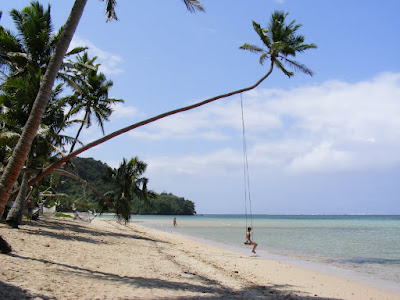
Luckily the weather did clear up and we were soon confronted with kitch scenes of turquoise waters, white sandy beaches and palm trees lolling about creating postcard perfect views. We spent a couple of days here swimming, sunbathing, snorkelling and kayaking around this tropical island, which we were sharing with just a few other people. No cars, no roads, no shops and no television it was very quiet and undeveloped, just like the rest of the northern coast.

Back on the “mainland” we continued around the northern and eastern coast of Viti Levu, and it was not how I imagined a Pacific island to be, lush green jungle, some interesting rock formations and mountains and cliffs falling away into the sea. We saw no sign of the racial tensions between Fijians and Indo-Fijians that have blighted the recent history, in fact on the buses the other passengers seemed to delight in living in such a society, which I guess goes to show that on a trip like this you can barely scratch the surface of a country.


We stopped for a few hours in Suva, the capital of Fiji and the biggest city in the South Pacific. It was as crowded, dirty and run-down as that sounds, attracting all sorts of drop-outs from all over Fiji and beyond. The saving grace was the colourful (as always) fruit market and the tasty Indian food served up in the small cafes around the bus station. Suva, Nadi and Lautoka all reminded me slightly of East African cities, or more precisely cities where Indian traders dominate but that are outside of India, they take all the best parts of India with them but leave behind the worst of the dirt and smells!

From Suva we ventured along the Coral Coast, stopping for a few nights at Beachouse, right in the middle of this stretch. One of Fijis oldest tourist areas but still fairly unspoilt, due to the isolated resorts spread out along the long stretch of coast. Beachouse is a typical backpacker resort but somehow feels slightly more opulent due to a few small details, mainly that it was big enough that you could get away from the group of gap yearers who couldn’t quite afford to follow the crowds onto the Yasawa flyer! Also, the weather had taken another turn for the worst however so it was a day or two before we could really appreciate it, at first the turquoise water disguised itself in the overcast conditions to resemble a muddy swamp!


I must say I was expecting Fiji to be much more over-run by tourism, and perhaps if we had visited the Mamanucas or Denarau then we would have seen the uglier side, but from what we saw Fiji has managed tourism very well, catering for almost all standards of guests without really impacting negatively on the livelihoods of the local people. Especially along the north coast you could be forgiven for thinking you had been smuggled into another country.

Apart from the fish curry in Suva the other culinary highlight of Fiji was grilled fish in coconut sauce which we had in both places we stayed. On Nananu-I-Ra it was served with cassava cakes and rou-rou, a Fijian vegetable similar to spinach. This, alongside the couple of really good curries we had, made up a good combination of Fijian cuisine. We searched in vain for somewhere to try the traditional ‘Lovo’, a pit barbeque and we also failed in of search for kava – the traditional drink of Fiji. It seemed something like Tedj in Ethiopia, everyone talks about it all the time but no-one ever seem to have any.


We finished our brief tour of Fiji by completing a circumnavigation of Viti Levu and spending a final night in Nadi. The main highlight of Nadi was the Hindu temple, built in the traditional South Indian Dravidian style, you know the ones painted in a thousand different colours. It really was beautiful, even if it was so hot it was hard to walk around barefoot, it was impressive enough grin and bear it!


Of course the Fiji weather could not let us escape without raising it’s ugly head once more so after visiting the temple and stuffing our faces with a final curry the heavens opened once more, leaving our hostel stranded and under several inches of water. It was as if the destiny of Fiji as described in Red Dwarf were coming true. Luckily it had cleared by the next day, I was concerned enough as it was to be flying on a Boeing 737 for a few hours over the Pacific Ocean to New Zealand, in bad weather it would have been the flying equivalent of a journey on one of those Philippine ferries!


Saturday, October 15, 2011

Uz jsme zase na ceste

Tak je tomu tak a jsme zase na ceste. Tentokrat jsme se rozhodli pro Australii, no a kdyz uz si clovek koupi letenku tak daleko, tak se musi zastavit po ceste, chteli jsme nekde v Tichomori a rozhodli jsme se pro Fidzi a pokracovat na Novy Zeland, kde se potkame s Lenkou a Pavlem. 3 mesice v Australii a po ceste zpet zastavkou v Jihovychodni Asii. Navrat do Evropy je zatim v planu nekdy v kvetnu. Vyperem, prebalime batohy a ceka nas New Orleans, po zemi pres Las Vegas do San Francisca a pak do Kanady.


balime

Odlet byl planovany na nedeli 9.rijna z Londyna na Fidzi s prestupem v Los Angeles. Dva tydny pred odletem nam bylo oznameno, ze let z LA na Fidzi s Air Pacific se zmenil na sobotu 8.rijna. Tyden jsme cekali na potvrzeni, jestli nas nacpou do nejakeho letadla British Airways z Londyna do LA o den drive. Nakonec ze jo, ale letadlo bylo uplne plny a v LA jsme meli misto 4, 8 hodin na prestup. Vypadalo to, ze ani nebudem sedet vedle sebe, lidi jako nas bylo vice, ale posadka British Airways si s tim dobre poradila. Leteli jsme Boeingem 747, nebylo moc mista na nohy, ale moc hezky se o nas starali a alkoholem nesetrili. V LA nam trvalo asi 2 hodiny se vubec dostat z letiste. Bylo krasny odpoledne asi 20 stupnu a na doporuceni Stepana, jsme sli asi 20 minut pesky na hambace s vyhledem na pristavajici letadla do In and Out Burger.


dobra naloz za $11 pro oba


Nocni let s Air Pacific byl moc prijemnej, zadny turbulence, sedeli jsme v prvnim patre Boeingu 747 a dobre jsme se vyspali. A trochu nas zaskocil dest, kdyz jsme v 5 rano pristali v Nadi, Fidzi, to jsme nejak necekali